

BIOLOGY & EVOLUTION
WITHIN THIS INTERPRETATIVE MODEL, INFORMATION, ENTANGLEMENT, EMERGENCE AND SCALE RELATIVITY ARE REGARDED AS FUNDAMENTAL ORGANIZING PRINCIPLES.
Biology investigates how life originates, develops, adapts and evolves. The theory of evolution provides the scientific foundation for our understanding of the diversity of life on Earth. The Fractal Framework takes this scientific knowledge as its starting point and explores how biological processes can be interpreted within a broader philosophical and ontological framework.
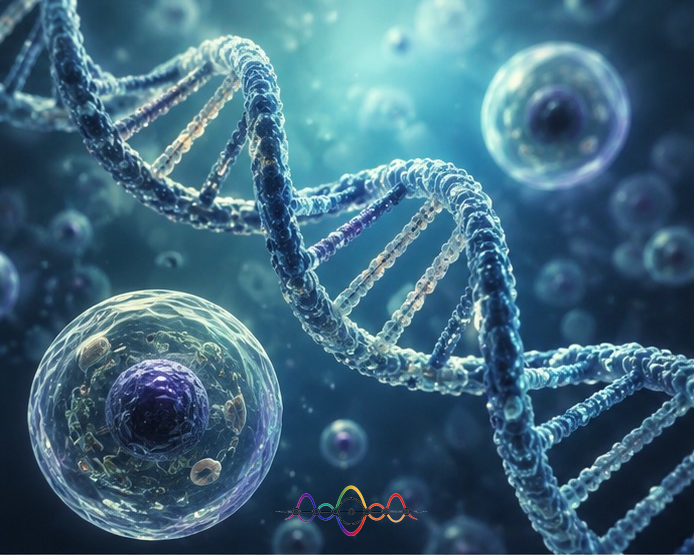
This Interpretation Does Not Replace the Theory of Evolution
Within this interpretative model, Information, Entanglement, Emergence and Scale Relativity are regarded as fundamental organizing principles that may manifest at different levels of organization. From this perspective, genetic information, cellular communication, ecosystems and biological evolution can be viewed as expressions of an ongoing process of organization and development.
This interpretation does not replace the theory of evolution or introduce alternative biological mechanisms. Instead, it adds a philosophical layer of interpretation in which life is regarded as a manifestation of broader organizing principles that may also be recognizable beyond biology.
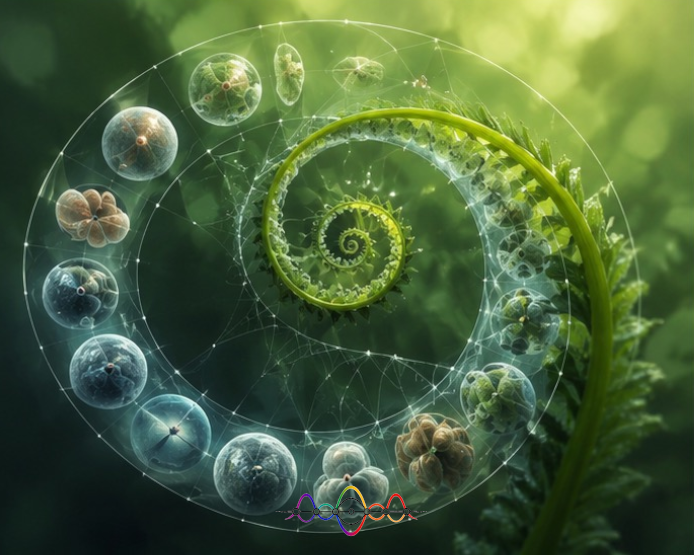
Life as Emergent Organization
Living systems consist of multiple levels of organization. Molecules form cells, cells form tissues, tissues form organs, and organs form complete organisms. At each level, new properties emerge that cannot be fully explained by the individual components alone. Within The Fractal Framework, this is regarded as an example of emergent organization.
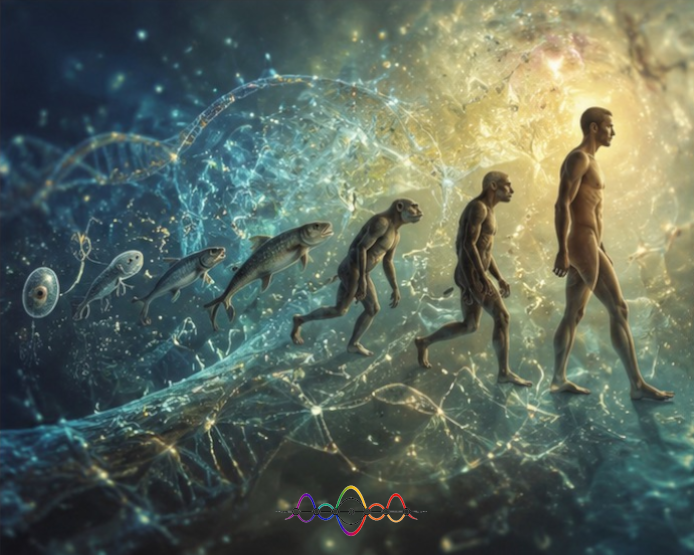
Evolution as a Continuous Process of Organization
Evolution can be interpreted as an ongoing process in which information is transmitted, modified and reorganized. Natural selection, genetic variation and environmental influences remain the scientific explanations for biological change. The interpretative model simply explores how these processes can be understood within a broader ontological perspective.
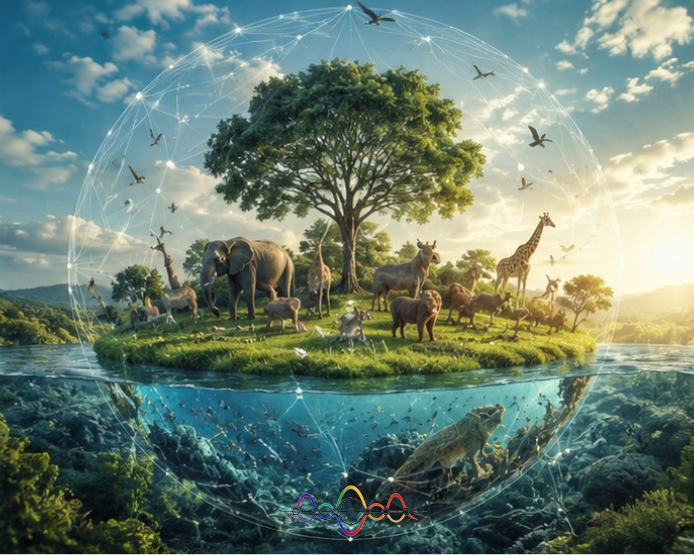
The Four Ontological Pillars in Biology
Within biology, the four ontological pillars are particularly evident. DNA and cellular communication illustrate the role of Information. Ecosystems, symbiosis and mutual dependencies demonstrate the interconnectedness of living systems. The organization of cells into complete organisms illustrates Emergence, while similar patterns of organization across different biological scales provide an opportunity for interpretation through the lens of Scale Relativity.
A Broader Perspective on Life
The Fractal Framework does not regard biological evolution as an isolated phenomenon, but as one possible manifestation of broader organizing principles. This creates a philosophical perspective in which biology is connected to other disciplines, such as cosmology, physics, consciousness and society, without replacing existing scientific explanations.
For a more detailed examination of this interpretation, you can consult the paper "Interpretation of Biology and Evolution According to the Fractal Framework".
Maak jouw eigen website met JouwWeb